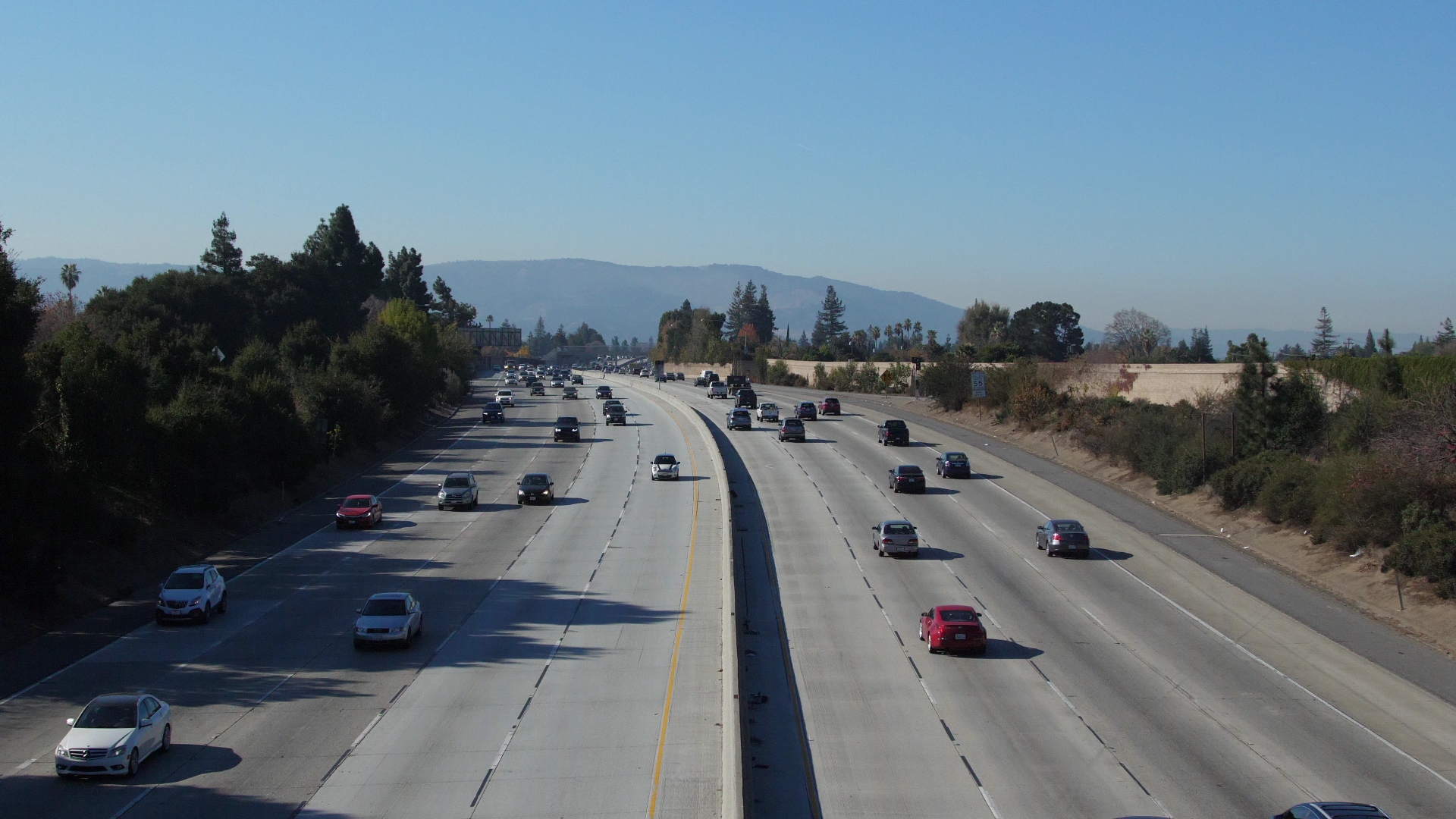
The AI City Challenge, hosted at ECCV 2026, continues to push the boundaries of computer vision and AI in real-world environments, with a strong emphasis on synthetic-to-real (Sim2Real) transfer and unified reasoning. The challenge drives innovation in intelligent transportation, smart cities, and large-scale video analytics by leveraging both large-scale synthetic data and real-world test scenarios.
By tackling diverse data sources—from multi-camera warehouse environments and traffic systems to multimodal video-language datasets—participants will develop and benchmark methods capable of robust perception, reasoning, and prediction under real-world constraints. A key focus of this edition is bridging the gap between synthetic training and real-world deployment, enabling scalable and generalizable AI systems.
This 10th edition of the Challenge introduces new reasoning-centric tasks, expanded Sim2Real evaluation protocols, and six challenging tracks as below:
Challenge Track 1. Multi-Camera 3D Perception (Sim2Real): Teams are tasked with tracking multiple object classes—including people, autonomous mobile robots (AMRs), humanoids, and forklifts—across large-scale camera networks. The dataset includes over 250 hours of synthetic video from 1,500 cameras with detailed 2D/3D annotations and cross-camera identities. A new real-world test set is introduced to evaluate Sim2Real generalization. Evaluation is based on 3D HOTA (Higher Order Tracking Accuracy).
Challenge Track 2. Transportation Safety Understanding and Captioning (Sim2Real): Using synthetic traffic datasets, participants develop models to understand and describe safety-critical scenarios in the real world. Tasks include video captioning and visual question answering (VQA) focused on pedestrian-centric risk and causal reasoning. Evaluation metrics include BLEU, METEOR, ROUGE-L, CIDEr, and VQA accuracy. Top-performing teams are required to submit Dockerized solutions for reproducibility and deployment validation.
Challenge Track 3. Anomalous Events in Transportation: This track challenges participants to build a single unified model that detects, reasons about, and explains anomalous events in transportation video. Training data includes 44,040 chain-of-thought reasoning annotations across 10 task types covering 3,670 CCTV videos from eight public sources. The main in-domain leaderboard (TAR) evaluates models on a human-verified test set across the same 10 task types. Two optional out-of-domain leaderboards extend the track to fisheye traffic-violation footage (FETV) and egocentric dashcam pedestrian-intent video (PSI VQA), testing generalization beyond the in-domain CCTV setting. TAR, FETV, and PSI VQA are scored on three separate leaderboards. Evaluation metrics include accuracy, macro-F1, temporal IoU, and reference-based language metrics (BERTScore, CIDEr, BLEU, METEOR, ROUGE-L).
Challenge Track 4. Text-Based Person Re-Identification (Sim2Real): Participants tackle text-based person retrieval, where natural language queries describe both appearance and behaviors (including anomalous actions). Models are trained on synthetic data and evaluated on real-world test sets. This track builds on recent benchmarks and emphasizes cross-modal reasoning between vision and language. Accuracy is measured using mean Average Precision (mAP).
Challenge Track 5. Generative Traffic Video Forecasting: This track introduces generative modeling for traffic scene forecasting. Participants generate future video frames conditioned on historical observations and textual descriptions. The goal is to produce temporally consistent and safety-aware predictions. Evaluation metrics include PSNR, SSIM, LPIPS, FVD, and vision-language model (VLM) scores for safety-critical events.
Challenge Track 6. Cross-City Object Detection (Milestone Project Hafnia): Cross-City Object Detection, organized by Milestone Project Hafnia and Universidad Autónoma de Madrid, focuses on fine-grained object detection in real-world traffic imagery under cross-city domain shift. Participants will train models on a large-scale, privacy-preserved dataset of traffic scenes through the Hafnia Training-as-a-Service platform and evaluate their models on hidden benchmarking data containing both source-city and target-city samples. The track is designed to study robust geographic generalization for vehicles and people detection while preserving compliance, privacy, and controlled access to real-world video data. Registration opens on May 18, 2026 through the Hafnia Track 6 community page.
Participants are invited to compete in one or more of the six challenge tracks. To join, please navigate to the page of your target track(s) under CHALLENGE tab.